Blank Paper Rebellion: My Experience
As a high school journalist, I stood transfixed as voices of rebellion resounded with force and fury.
It was a cold November night in 2022 when tragedy struck in Urumqi. Little did the residents of the high-rise apartment building know, as they tucked their children into bed, that danger was lurking right outside their walls.
Within hours, the stillness of the night was shattered by screams and billowing smoke. A fire had broken out, raging through the building at lightning speed. Panicked parents raced to reach their children, only to find their doors blocked by immense fences - imprisoning them inside.
The barricades had been built by the government months before, caging people in their own homes in the name of stamping out COVID. That night, the cages became coffins. The fire trucks arrived quickly but were barred from entering. Helpless firefighters could only watch through the fence as flames engulfed room after room.
By morning, the inferno had claimed 10 lives, even little ones as young as three. This was no isolated case. Across China, countless communities found themselves trapped behind barbed wire and concrete, cut off from aid in the name of virus containment. No emergency was justification enough to free the people from their government-built cages. Not even when the danger came from within.
For hundreds of days, an eerie silence had fallen over China’s cities. Stores shuttered, schools closed, public life ground to a halt. Under the guise of virus containment, the government had locked its people away, indifferent to the suffering it caused. Jobs vanished, businesses collapsed, and the most vulnerable were left to fend for themselves.
Behind closed doors, people struggled to access medical care. Online, even whispers of dissent were swiftly extinguished. After decades of censorship, people knew not to speak out. But this time, something was different. Empathy for the victims of the Urumqi fire had lit a spark, and discontent was smoldering.
It began in Shanghai. On Urumqi Middle Road, a bold few held up blank sheets of paper - a silent protest against the silencing of dissent. Before long, the movement spread to college campuses and streets across the country. People young and old raised their voiceless signs, risking everything to demand freedom and human rights.
In Guangzhou, activists rallied the people: “Meet at Haizhu Bridge!” Online, they circumvented censorship to spread the word. As a young journalist in Guangzhou, I watched in awe as posters went up calling for solidarity and freedom of speech. After a lifetime of suppression, my city was finally speaking out.
That night, the bridge overflowed with bodies and blank pages. We stood together, bound by yearning for liberty and justice. For the first time, I felt the electric thrill of defiance stirring the air. A people united can accomplish anything - even in the land of censored dreams. There, under the watchful gaze of the authorities, freedom was blossoming.
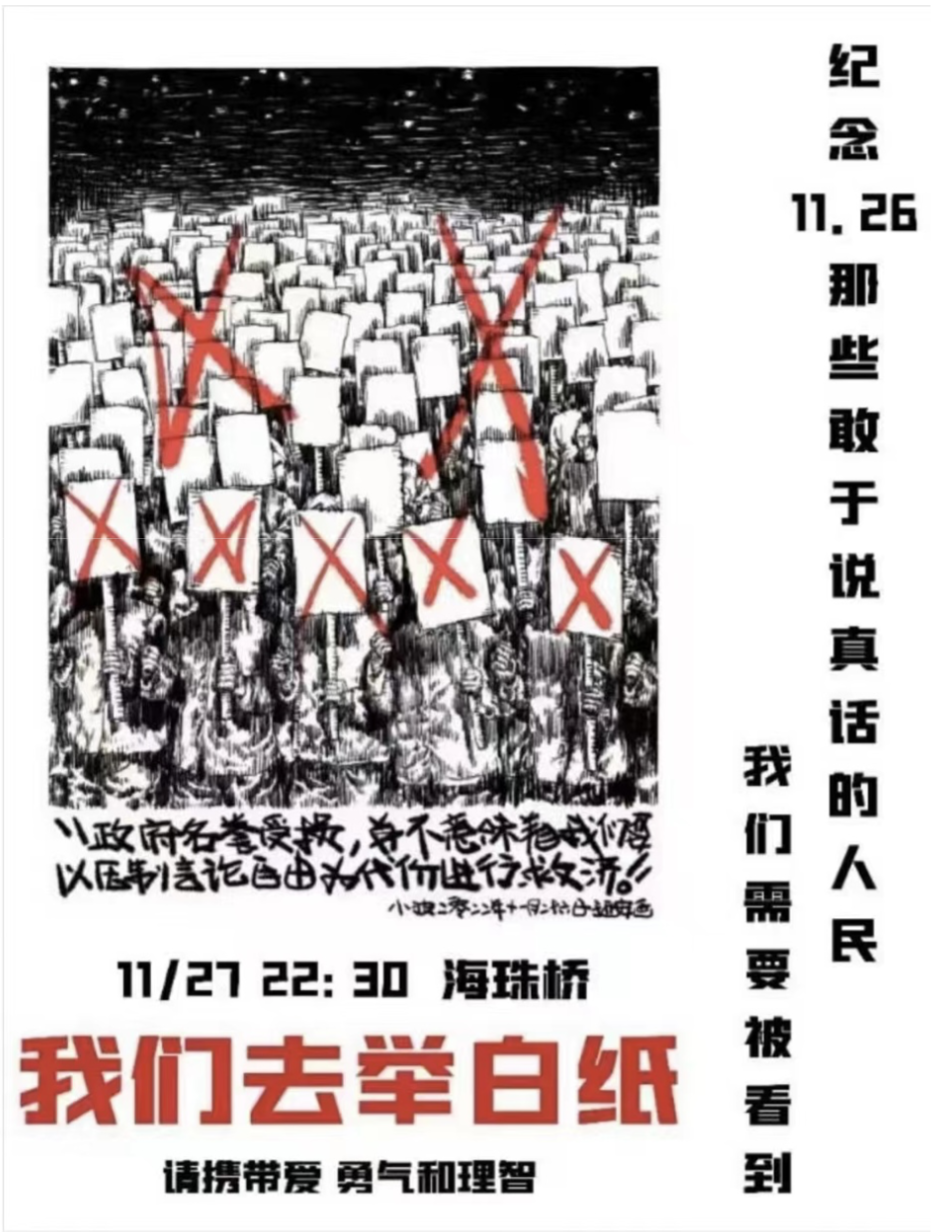
“Hold your blank paper, and we make our voices heard!”
Revolutionary anthems played as police formed a cordon around the protesters, gradually pushing them towards a nearby highway. The police surrounded the crowd while directing onlookers away from the square.
At this point, shouts rang out from the crowd, urging onlookers to join the demonstration. Protesters raised blank sheets of paper, a symbol of resistance against censorship. Chants of “Guangzhou people, stand up!” echoed through the streets as more joined, linking arms in solidarity.
The police presence steadily intensified, but the growing numbers of demonstrators remained undeterred. While the ultimate outcome was uncertain, in that moment the crowd was bonded by a shared yearning for change and greater freedoms, even in the face of heavy opposition. The scene reflected a nation pushed to its breaking point after months of restrictions aimed at virus containment.
“Guangzhou people, stand up!” The defiant cry echoed through the streets as more joined the swelling crowd. Blank pages fluttered like doves taking flight as the core of protesters swelled. Even onlookers, once passive, stepped forward to join the barricaded throng.
Together the voices swelled, firm in resolve: “No to endless lockdowns! Yes to freedom!” “May the dead rest in peace; long live democracy!” The songs of resistance soared ever louder, stirring hearts long silenced by fear.
But even as freedom stirred, so too did the forces of oppression. Under the dim streetlights, I witnessed students arrested, their phones seized without cause or warrant. When one man shouted a slogan for reform, he was silenced - handcuffed and spirited away as if he never existed.
In that chilling moment, the dark plot of 1984 unfolded before my eyes. To speak against the government, even in protest of unimaginable cruelties, meant risking everything. Some among us would vanish tonight, swallowed by the void of state secrecy and control.
On that night, tens of thousands brought down the walls that had imprisoned them, emerging from hundreds of days of isolation. In cities across China, youth left their homes to join the protest, unafraid to speak truth to power. Hand in hand, we called on the nation to remember those who suffered and perished under endless lockdowns.
And for the first time in decades, the people were heard. Since the protests 40 years prior, such courage had not been seen on these streets. But in that electrifying moment, change swept through like a tidal wave, building momentum from a spark into an unstoppable force.
Just a week later, the locks and barricades fell away. The government was forced to abandon its cruel policies of endless containment and restriction. Travel opened up, communities reunited, and hope blossomed like spring after the harshest winter.